
Some links in this article are affiliate links. If you book through them we may earn a small commission, at no extra cost to you. We only recommend experiences we'd send a friend to.
If the Gothic Quarter is Barcelona's medieval heart, El Born is the slightly bohemian sibling that grew up running a wine bar. Same age, same labyrinthine streets, half the tourists, twice the depth.
El Born, officially the neighborhood of Sant Pere, Santa Caterina i la Ribera, but nobody calls it that, sits immediately east of the Gothic Quarter, separated only by the Via Laietana. Most visitors walk past it without realizing they've left one neighborhood and entered another. Which is part of why El Born works so well for food: locals still treat it as theirs.
This guide covers what makes El Born specifically worth a food tour, what to eat there, and the two tours we'd actually recommend. Both bookable through trusted booking partners at the same price as direct.
The short answer:For a focused El Born food tour with a small group, book the Viator El Born Food Tour, three hours, tapas plus dinner, stays inside the neighborhood. For a private experience that combines El Born with the Gothic Quarter, book the E-volve Private Tapas Tour. Both are excellent; the choice is between group and private.
What makes El Born different
Three things separate El Born from the rest of Barcelona's eating neighborhoods.
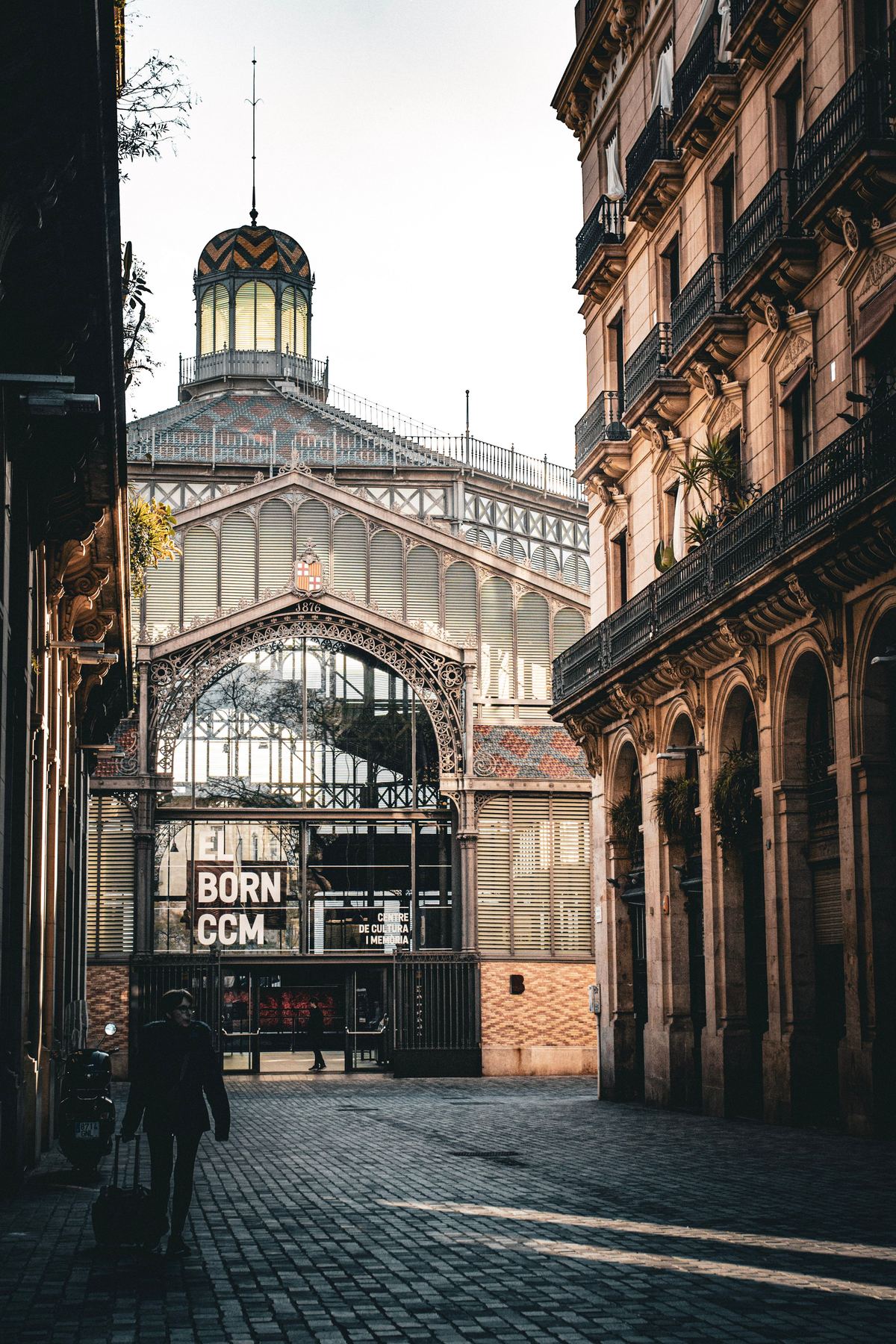
The architecture sets the mood. El Born is where medieval Barcelona meets 19th-century modernism. The 14th-century Basílica de Santa Maria del Mar dominates the southern edge of the neighborhood, Catalan Gothic, austere, beautiful. A few blocks north sits the Mercat del Born, a wrought-iron-and-glass market hall from 1876 that's now a cultural center (the food market moved out; the building stayed). Between them: narrow lanes of stone buildings, hidden courtyards, and Passeig del Born itself, a wide pedestrian street that used to host medieval jousting tournaments and now hosts wine bars.
The food culture leans modern. Where the Gothic Quarter has 200-year-old vermutería and bodegas, El Born has more recent arrivals: natural wine bars, modernist tapas restaurants, places where the chef worked at El Bulli before opening somewhere small. The neighborhood attracts younger Barcelona, designers, architects, restaurant industry people who eat where their friends eat. The food is excellent but the framing is different. Less "traditional Catalan grandfather cooking", more "your friend who became a serious cook".
The pace is calmer. El Born sees fewer cruise-ship day-trippers than the Gothic Quarter and far fewer than Las Ramblas. The streets are still busy, this is central Barcelona, not a hidden secret, but you can actually walk down them. Bars have space at the counter. Tour groups exist but they're smaller. It's the Gothic Quarter without the queue.
What to eat in El Born
The neighborhood doesn't have a single signature dish the way some Spanish regions do, but there are food categories El Born does particularly well.
Natural wine and small plates. Multiple bars on Passeig del Born and the surrounding streets specialize in low-intervention wines from small Catalan producers, paired with a short menu of seasonal small plates. This is what El Born is best known for among locals.
Cava and seafood. Cava is the Catalan answer to Champagne, sparkling wine made by the same traditional method, mostly produced just outside Barcelona in Penedès. Several El Born bars do cava-and-seafood specifically: a glass of dry cava with a half-dozen oysters or a plate of grilled gambas. Civilised.
Modern Catalan tapas. Updated versions of traditional dishes. Esqueixada (salt cod salad) served on a brioche crouton. Pa amb tomàquet topped with anchovy and burrata. Patatas bravas with three different sauces. Some of this is gimmicky; the good versions are excellent.
Vermouth. Like the rest of Barcelona, El Born does vermouth hour (roughly noon to 2pm on weekends), but with a more contemporary bent than the Gothic Quarter's traditional vermuterías. House-made infusions, unusual garnishes, sometimes a small kitchen offering tapas to pair.
Catalan natural cheese. A handful of cheese specialists operate in El Born, sourcing from small producers in the Pyrenees. If you're on a tour that doesn't include a cheese stop, ask the guide where to buy some to take home. Tupí (fermented sheep's-milk cheese) and garrotxa (semi-firm goat) are the local picks.
The two tours, reviewed
| Tour | Duration | Group | Rating | From |
|---|---|---|---|---|
| El Born Food Tour with Dinner | 3 hrs | Max 10 | ★ 4.8 | €95 |
| Private Tapas, El Born & Gothic | 3.5 hrs | Private | ★ 4.9 | €175 pp |
Prices checked 11 August 2026. Operators adjust seasonally, so August and September rates sit above the winter floor.
1. El Born Food Tour with Tapas and Dinner
From €95 · 3 hours · Small group (max 10) · ★ 4.8
This is the El Born-specific pick. Three hours, all stops inside the neighborhood, with a guide who knows the modern Catalan food scene rather than the standard "here's jamón, here's vermouth" script. The tour usually hits four bars: vermouth and conservas at a traditional stop, then progressively more modern places, finishing with a sit-down dinner at a small bodega-style restaurant.
What makes it work: the tour stays in El Born. Many "Barcelona food tours" use El Born as one of several neighborhoods, which means you get 20 minutes here before moving on. This one spends the full three hours within walking distance of the Basílica de Santa Maria del Mar, which is the right way to experience the neighborhood. You eat more, walk less, and the guide has time for actual context rather than a forced march between stops.
The small-group cap (10 people) is enforced. Expect to share the experience with 6-8 strangers rather than a busload.
Best for: Travelers who want a focused El Born experience. Couples and small groups who don't want a private tour but want quality. Foodies who'd prefer modern Catalan cooking over the most traditional version.
Skip if: You want to cover multiple neighborhoods in one tour (book a broader Barcelona tour instead) or you want a fully private experience.
2. Private Tapas Tour in El Born & Gothic by E-volve
From €175/person · 3.5 hours · Private · ★ 4.9
The private alternative. E-volve runs small-group and private tours across Barcelona; this one specifically covers El Born and the Gothic Quarter together, useful if you want to experience both neighborhoods in one evening rather than committing to one. Three and a half hours, four stops, a private guide who adjusts the route to what you actually want to eat.
The private format means you can do things group tours can't accommodate: ask the guide to skip stops, linger longer at others, request specific dishes, accommodate dietary restrictions properly. The guides are local, usually with restaurant industry backgrounds, and the conversation tends to go deeper than the standard tour script. If you're a couple traveling together who'd find a group tour socially awkward, this is the upgrade.
The price reflects what private tours cost in Barcelona. It's about 80% more expensive per person than the group tour above, which is fair given what you're getting (and standard for the category, private tours typically run €150-200 per person regardless of operator).
Best for: Couples on a special-occasion trip. Travelers with strong dietary restrictions (vegetarian, gluten-free, specific allergies). Anyone who'd rather pay more for a private experience than save money on a group tour.
Skip if: You're traveling solo (per-person price is highest with one person) or you specifically want a tour focused only on El Born without crossing into the Gothic Quarter.
El Born vs Gothic Quarter, which to choose
If you only have one evening in Barcelona and you're picking between an El Born tour and a Gothic Quarter tour, the choice comes down to what you're optimizing for.
Pick the Gothic Quarter if you want the most "traditionally Barcelona" food experience, older bars, more historical context, more traditional dishes, more of the city's bar culture as it's existed for the past hundred years. The Gothic Quarter is the safe pick for first-timers, and the food culture there is genuinely older and deeper. We've covered the five best Gothic Quarter food tours separately.
Pick El Born if you want a slightly more modern, slightly more refined version of the same. Smaller bars, more natural wine, more recent restaurants from chefs who've worked at serious kitchens. The food is more contemporary; the neighborhood is calmer; the experience feels less touristy. For repeat visitors, foodies, or travelers who already have a sense of "regular" Catalan food and want to see what's new, El Born is the better fit.
If you have multiple evenings: do both, in either order. They're 15 minutes apart on foot. Many locals genuinely move between them on the same evening.
What to do in El Born when you're not eating
Short list, because most travelers want a quick sense of what fits around a food tour:
Basílica de Santa Maria del Mar. The neighborhood's defining building. Free to enter; €10 if you want the rooftop tour. 14th-century Catalan Gothic, completed in 54 years (genuinely fast for a medieval cathedral). The light through the stained glass at 4-5pm is worth the visit alone.
Picasso Museum. Right at the heart of El Born. The young Picasso lived in Barcelona; the museum focuses on his early work and his ongoing relationship with the city. Smaller and more navigable than other Picasso museums. Book tickets ahead in summer.
Mercat del Born / El Born CCM. The old wrought-iron market hall, now an archaeology-meets-cultural-center site. Excavations underneath reveal a 17th-century Barcelona neighborhood that was demolished to build a citadel after the War of Spanish Succession. The exhibit is small but moving; free entry on Sundays.
Passeig del Born. The wide pedestrian street that gives the neighborhood its name. Cafes and bars along both sides. Good for an afternoon coffee or evening vermouth before your tour starts.
Get the free Barcelona food guide
Eight pages: the 15 dishes worth ordering, the phrases that get you served properly, and where to eat by neighborhood. Print it or save it offline for the trip.
Practical notes
Both tours start in the evening. Standard Barcelona dinner timing, start around 6:30pm or 7pm, finish around 9:30pm or 10pm. Eat a light lunch.
Book at least a week in advance during high season (May-October). Both tours, especially the small-group one, sell out 5-7 days ahead.
Wear comfortable shoes. El Born's streets are cobblestoned and slightly uneven. The tours involve standing at counters for 30-40 minutes per stop. Heels are a bad call.
Tipping. Not expected the way it is in the US, but appreciated for guides on small-group tours. €5-10 per person is generous; nothing at all is also acceptable if the tour was just okay.
For broader context on how Barcelona food tours work and what to look for in any tour, see our guide to the 9 best food tours in Barcelona. For what to actually eat once you've found the right bars, our 15-dish guide covers the essentials.