
Some links in this article are affiliate links. If you book through them we may earn a small commission, at no extra cost to you. We only recommend experiences we'd send a friend to.
First-time visitors to Barcelona ask the same question in the same order: What should we eat? Where? When? The first one is the easiest to answer and the most often answered badly.
Barcelona is in Catalonia, not in "Spain" in any culinary sense. The local cuisine borrows from but doesn't replicate what you'd eat in Madrid or Seville. Some of the most famous "Spanish" dishes, paella, gazpacho, jamón, are tourist defaults here, not Catalan native. The local food tradition has its own logic, its own ingredients, and a handful of dishes you won't find anywhere else.
This guide covers the 15 dishes I'd prioritize on a 3-5 day Barcelona trip. They're ordered roughly by how unmissable they are, the first five are non-negotiable, the next five are strong recommendations, and the last five are nice-to-have if you have time and appetite.
The short answer:If you only do one food experience in Barcelona, eat pan con tomate, jamón ibérico, and esqueixada at a proper tapas bar, then drink a glass of vermouth before lunch on a different day. That covers more cultural ground than anything else.
The five you can't skip
1. Pan con tomate (pa amb tomàquet)
The dish that locals would defend with their lives. Toasted bread rubbed with garlic and the cut side of a ripe tomato, then drizzled with olive oil and a pinch of salt. That's it. Four ingredients. Done badly it's bland toast. Done well, properly ripe tomato, real olive oil, decent bread, salt that hasn't been added in the kitchen but at the table, it's one of the great inventions of European peasant cooking.
Order it at any tapas bar. The Catalan name (pa amb tomàquet) is the local one; pan con tomate is the Spanish translation. Either works. Bonus points if it arrives with the tomato halves and a clove of garlic on the side and you rub it yourself, that means the place takes the dish seriously.
2. Jamón ibérico
Not technically Catalan, it comes from western Spain, but it's eaten everywhere in Barcelona and the quality at any decent tapas bar is dramatically better than anything you'd get abroad. Cured ham from black-footed Iberian pigs, sliced paper-thin, served at room temperature.
The hierarchy you should know: jamón serrano is the entry-level (still good), jamón ibérico is the mid-tier, jamón ibérico de bellota is the top, from pigs fed exclusively on acorns. The price difference is real but worth it for the bellota version at least once. Order 50 grams to share. Eat with bread, no condiments.
3. Esqueixada
This is the Catalan dish you should make a specific effort to find. Salt cod (bacallà) cured, then desalinated, shredded raw, and tossed with tomato, onion, black olives, and olive oil. Served cold. Tastes like nothing else, clean, salty, briny, refreshing.
It's the dish that most signals you've stepped outside the tourist menu. If a restaurant's menu has esqueixada listed in Catalan and you can't find it on the English translation, that's a good sign. Skip places that offer it in summer only with an apology; it should be a year-round staple.
4. Patatas bravas
The bar-snack everyone orders. Fried potato chunks topped with two sauces: a spicy tomato-paprika sauce (brava) and a garlic aioli. The trick is the contrast, they should be served hot enough to steam, with the sauces cold or just-cool. Crap versions skip the aioli and use ketchup; you want both sauces, properly made, applied just before serving so the potatoes stay crisp.
Order at any tapas bar but expect variation, Barcelona's patatas bravas style differs from Madrid's. Catalan versions tend to be slightly less aggressive on the heat.
5. Crema catalana
The dessert. A custard flavored with citrus zest and cinnamon, finished with a thin sheet of caramelized sugar on top. Yes, it's similar to crème brûlée, Catalans will tell you they invented it first, the French will tell you they did, the historians are agnostic. The Catalan version uses milk rather than cream, citrus rather than vanilla, and is lighter overall.
You'll find it on most traditional Catalan restaurant menus. Skip the "crema catalana ice cream" variant, it's a tourist invention. The real thing is served chilled with the caramel still hot from the torch.
The five strong recommendations
6. Bombas
The Barcelona invention. Spheres of mashed potato stuffed with seasoned meat, breaded, deep-fried, and served with the same two sauces as patatas bravas, spicy red sauce plus aioli. Apocryphally invented in Barceloneta in the 1950s to resemble bombs (hence the name; this was post-civil-war Catalonia).
They're heavier than patatas bravas, really one bomba per person is enough, but distinctly Catalan in a way patatas bravas isn't. Worth seeking out at any bar in Barceloneta or El Born specifically.
7. Calçots (in season only, January to April)
If you're in Barcelona between January and April, change your plans to eat these. Calçots are a kind of green onion grilled directly over fire until the outsides are charred black, then peeled back to reveal soft, sweet white centers. You dip them in romesco sauce, almonds, roasted red peppers, garlic, olive oil, and eat them with your fingers, head tilted back, dropping the whole thing into your mouth from above.
They come from a single region (Valls, southwest of Barcelona) and are genuinely seasonal. Many restaurants offer calçotada menus during the season, a fixed feast that's one of the best experiences in Catalan eating. Outside of January-April, don't bother ordering them; they won't be fresh.
8. Fideuà
Paella's lesser-known sibling, and arguably more interesting. The same idea, a flat pan, a flavored base, then a starch absorbing all of it, but using short, thin noodles (fideos) instead of rice. Usually made with seafood. The noodles toast slightly at the edges and develop a similar crispy crust (socarrat) to paella.
This is a better Barcelona order than paella for two reasons: paella isn't actually Catalan (it's Valencian), and most Barcelona paella aimed at tourists is a sad imitation. Fideuà is the dish that Catalans actually eat for special occasions. Order from a place that lists both options and you'll usually find the fideuà takes itself more seriously.
9. Botifarra amb mongetes
The dish for a long Sunday lunch. A grilled Catalan pork sausage (botifarra) served with white beans (mongetes) sautéed in olive oil and garlic. Simple, hearty, deeply Catalan, and almost never found on tourist menus. This is what a local family eats at home.
Order it at a traditional restaurant, not a tapas bar, it's a sit-down lunch dish, not a small plate. Best eaten with a glass of strong red wine and no rush.
10. Croquetas
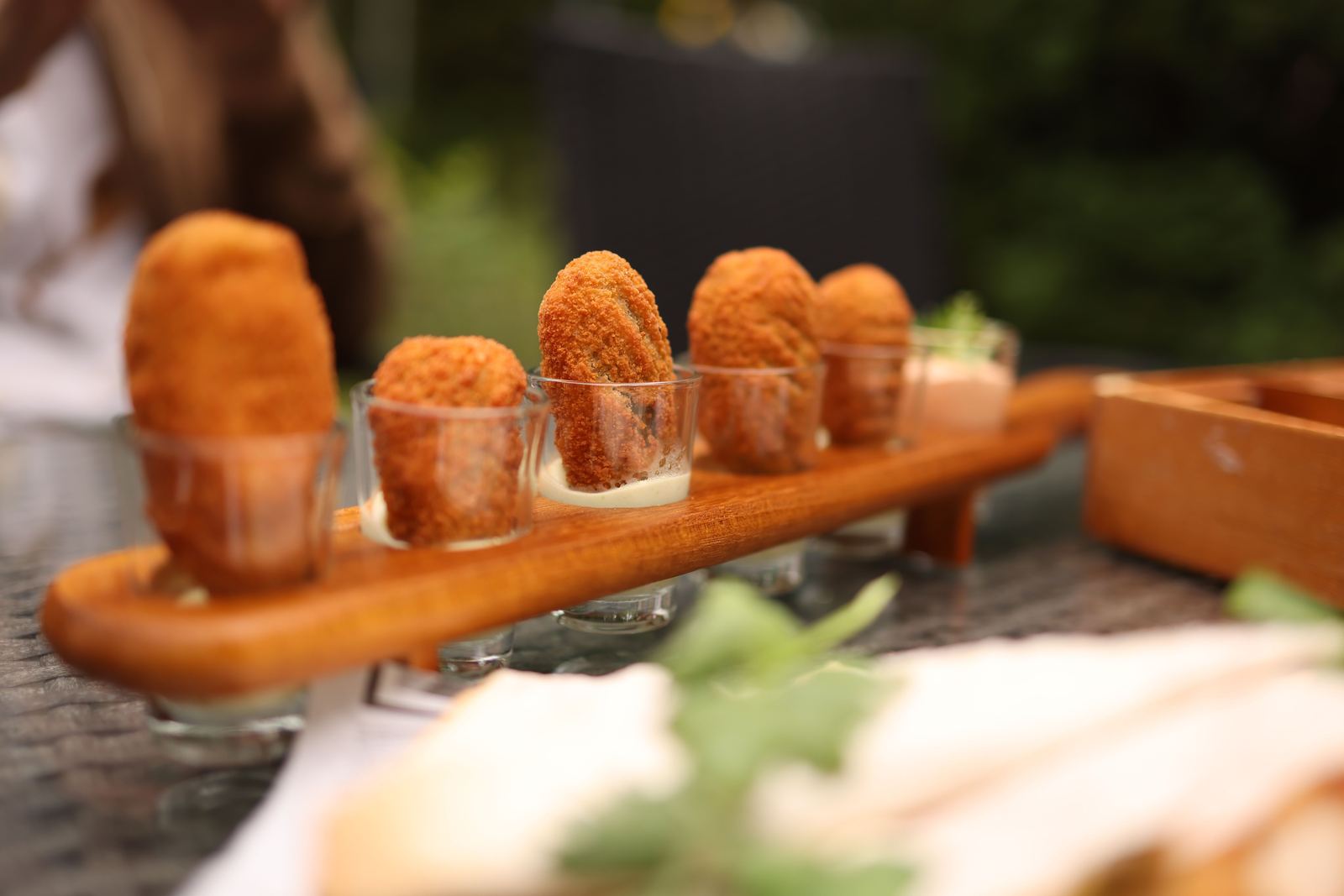
The tapas bar staple. Small fried cylinders of bechamel mixed with shredded meat or fish, usually ham, chicken, salt cod, or wild mushroom. Crispy outside, molten inside. Good versions are creamy and barely hold their shape. Bad versions taste of grease and freezer.
The simplest test of a tapas bar's quality. If the croquetas are great, the rest of the menu probably is too. If they're mediocre, leave and go next door.
The five worth-trying-if-time-allows
11. Escalivada
Roasted vegetables, usually eggplant, bell peppers, onions, tomatoes, peeled, sliced, dressed with olive oil and salt, sometimes topped with anchovies. Served at room temperature. Tastes simple and is anything but; the slow roasting concentrates the flavors completely. Often appears alongside esqueixada as a cold tapa.
12. Pintxos (and how they differ from tapas)
Technically Basque, not Catalan, but you'll find a handful of proper pintxos bars in Barcelona, usually in El Born or the Gothic Quarter. Pintxos are small bites pre-arranged on top of bread, displayed on the counter, picked up and counted at the end. The difference from tapas is the system: pintxos are self-service, tapas are ordered. Pintxos bars in Barcelona aren't as deep as those in San Sebastián, but a stop at one for an hour is a fun comparison.
13. Vermouth (more drink than dish, but a meal in its way)
Worth a separate mention because it's the single most overlooked aspect of Barcelona food culture for visitors. Vermouth hour (la hora del vermut) is roughly 1pm, the pre-lunch ritual when locals stop at a bar for a glass of vermouth on tap, served over ice with a slice of orange, sometimes a green olive, paired with a small plate of olives, anchovies, conservas, or potato chips.
It's not an aperitif in the cocktail-hour sense. It's an institution. The best vermouth in Barcelona comes from barrels at proper vermuterías, Quimet & Quimet, Bodega 1900, Casa Mariol, not bottles. If you do one thing on Sunday around midday, do this.
14. Coca
A flatbread, usually rectangular, topped with anything from caramelized onion and sardines to escalivada or pine nuts and raisins. The savory ones are common at bakeries and bars; the sweet version (coca de Sant Joan) is a holiday dessert. Order coca as a snack or a starter, it's portable, cheap, and uniquely Catalan.
15. Sea snails (cargols / caracoles)
Bonus dish for the curious. Tiny snails, slow-cooked in a tomato and garlic sauce, eaten with toothpicks at the bar. More associated with rural Catalonia than Barcelona specifically, but you'll find them on traditional menus. Texture is firmer than escargot; flavor is earthier. Skip if you don't like challenges; love them if you do.
What you should not eat in Barcelona
Paella in any restaurant on Las Ramblas. It's microwaved at best. If you want paella in Barcelona, find a Valencian-run restaurant in a residential neighborhood (Gracia or Sant Antoni are good bets). Or just order fideuà instead, it's the local equivalent and better executed.
Sangria. Locals don't drink it. It exists for tourists. Order wine (Catalonia produces excellent wine, especially from the Penedès region) or vermouth instead.
Anything at a restaurant with photos on the menu. Universal rule, but especially true in Barcelona's old quarter. Photos signal "designed for tourists who can't read the language" which usually means food designed for the lowest common denominator.
"All-you-can-eat tapas." Tapas culture is built on small, distinct, well-made portions. An all-you-can-eat format defeats the entire premise. If you see this advertised, walk on.
When to eat what
Spanish meal times are real and most visitors get them wrong, costing themselves the best food experiences. The rough schedule:
Breakfast (8-10am): Light. Coffee, a croissant or pastry, maybe a small bocadillo with tomato. Don't expect substantial breakfast options, they barely exist here.
Vermouth hour (12pm to 2pm): Glass of vermouth, snack-sized plate. Sunday is the day for this if you do it once.
Lunch (2pm to 4pm): The biggest meal of the day. Three courses if you do a menú del día (fixed-price lunch, typically €15-22 including wine, extraordinary value). Most kitchens close 4-8pm.
Pre-dinner / tapas crawl (7pm,9:30pm): When tapas bars get busy. Multiple small stops; one or two dishes per bar.
Dinner (9pm to 11pm): If you sit down to dinner before 9pm, you'll be eating with other tourists. After 9 is when locals show up.
Get the free Barcelona food guide
Eight pages: the 15 dishes worth ordering, the phrases that get you served properly, and where to eat by neighborhood. Print it or save it offline for the trip.
Eat all of this in three hours
If reading this list has overwhelmed you and you want a shortcut: a good food tour covers a lot of this ground in a single sitting, with a guide who can explain what you're eating in real time. We've ranked the nine best food tours in Barcelona separately, the top pick covers pan con tomate, jamón, croquetas, patatas bravas, and a sit-down dish in three hours, plus drinks.
Heading to Madrid too? It is a very different kitchen, and I have done the same exercise for it in what to eat in Madrid, including why you should not order paella there either. And for the Basque version, where the best food is chalked on a board rather than sitting on the counter, see what to eat in San Sebastián.
For more on where to eat across Barcelona neighborhood by neighborhood, see our Barcelona food guide, or go straight to the neighborhood guides for El Born, Sant Antoni and the Eixample food and wine tours. And if you're planning to navigate the city's most famous market, our guide to eating at La Boqueria covers which stalls to skip and where locals actually buy their lunch.