
Some links in this article are affiliate links. If you book through them we may earn a small commission, at no extra cost to you. We only recommend experiences we'd send a friend to.
Cocido madrileño is the dish Madrid would put on its flag, and it's one most visitors never eat, because it doesn't look like anything on a tourist menu. It's a chickpea stew served in three courses, it takes two hours to eat, and it's only properly worth ordering for about half the year. If you're in Madrid between October and April, it's the one meal I'd plan the day around.
This is what a good one should be like, how to eat it properly, and the places in Madrid that have been making it for a century or more.
The short answer:Cocido is a winter lunch, not a dinner, and it comes in three courses called vuelcos: the broth as a noodle soup, then the chickpeas and vegetables, then the meats. Book a day or two ahead, and don't fill up on the soup. La Bola, cooking in individual clay pots over charcoal since 1870, is the one to start with.
What cocido actually is
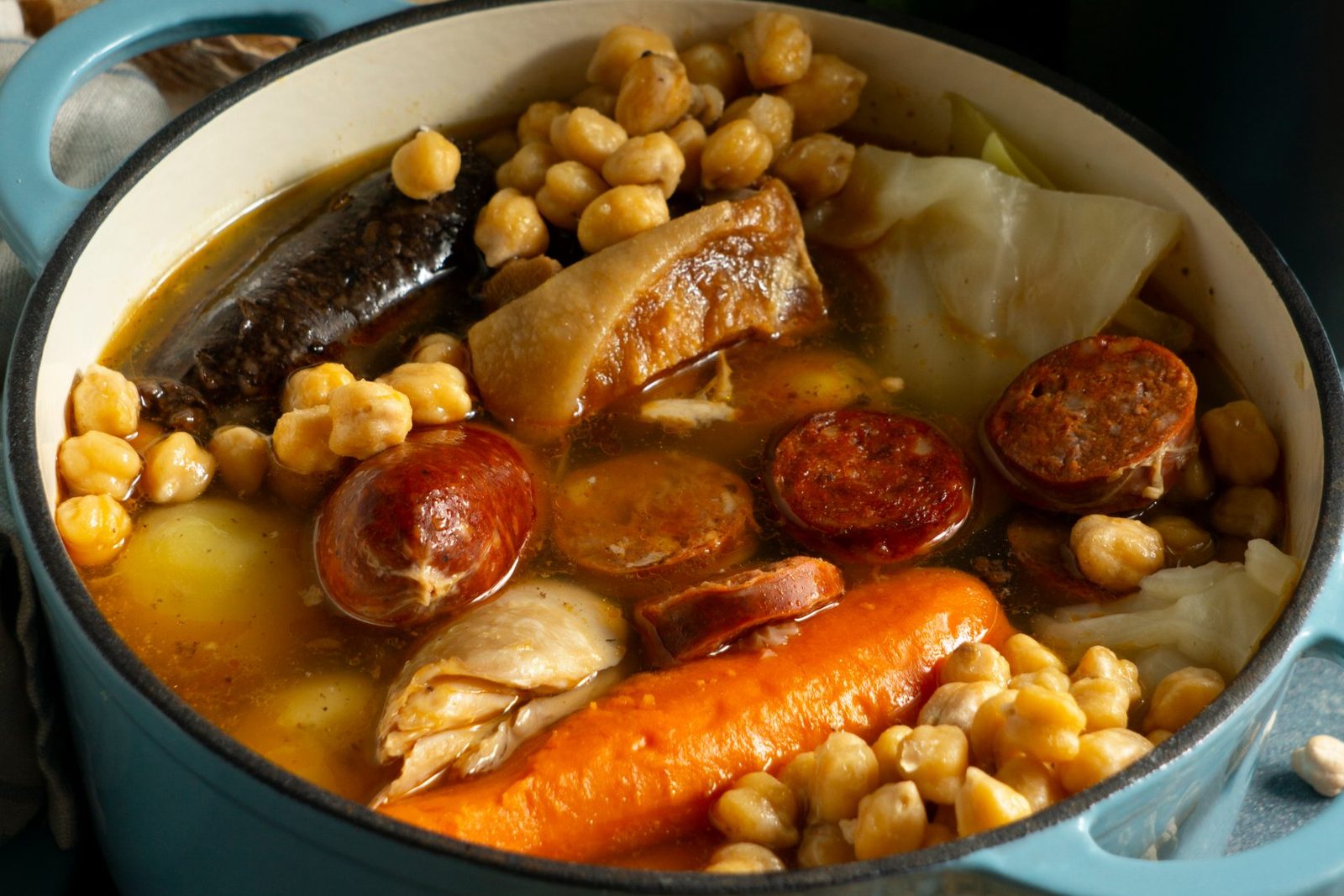
At its core, it's chickpeas slow-cooked for hours with meat, vegetables and bones until the water becomes a deep, rich broth. The meats vary by kitchen, but you'll usually find beef shank, chicken, chorizo, morcilla (blood sausage), cured pork belly called tocino, and sometimes a ham bone. The vegetables are the sturdy kind: cabbage, carrots, potatoes.
Its history is long and argued over. The usual account traces it back to adafina, a stew Spain's Jewish communities cooked slowly for the Sabbath, with pork added over the centuries. By the 1600s it was eaten across Madrid's social classes, and how much meat was in your pot said something about your standing. Madrid doesn't have many dishes it can call entirely its own. This is the big one.
How to eat it: the three vuelcos
The word vuelco means "tipping out," because each course is tipped out of the same pot. The order matters, and so does the pacing.
1. The soup
First, the broth is strained off and served with thin noodles, fideos. It should be golden, clear and full of flavor. Eat it while it's hot. This is where people make their big mistake: the soup is so good, and comes with so much bread, that they fill up on it. Don't. Two more courses are coming.
2. The chickpeas and vegetables
Next come the chickpeas, with the cabbage, carrots and potatoes. Good chickpeas are the test of a good cocido: creamy and almost buttery inside, holding their shape without being chalky. Many locals mash in a piece of the tocino from the meat course, or splash a little broth over the top. Some places serve a tomato sauce or pickled guindilla peppers on the side, which cut through the richness.
3. The meats
Finally, a platter of everything that was cooking in the pot: beef, chicken, chorizo, morcilla and tocino. Eat it with bread. By this point you'll understand why nobody in Madrid has a big dinner on a cocido day.
What makes a good cocido
- Creamy chickpeas. The single best indicator. Hard or grainy chickpeas mean they weren't soaked or cooked long enough.
- A broth with depth, clear rather than greasy. The best kitchens skim the fat off carefully.
- Slow cooking. Hours, not minutes. The most traditional versions cook in individual clay pots called pucheros, over charcoal, which gives the broth a gentle smokiness you won't get from a pressure cooker.
- Good meats, tender enough to fall apart, with a chorizo and morcilla that taste of something.
- Generosity. Some places will refill your soup or chickpeas if you ask. Cocido is not a dish that rewards small portions.
When to eat it
Lunch, not dinner. Cocido is a midday meal, typically from about 1:30 in the afternoon. A cocido dinner would be unusual, and many restaurants simply don't serve it in the evening.
Winter, not summer. The season runs roughly from October to April. It's a heavy, warming dish, and some of the best restaurants take it off the menu in the summer months, so check before you go if you're visiting in warm weather.
Book ahead. The good places cook cocido to order, so it's worth reserving a day or two in advance, and much further ahead for a weekend at the most popular ones.
Where to eat it in Madrid
Restaurants change their hours and prices, especially through the seasons, so check before you make a special trip.
La Bola, the classic
Calle de la Bola, near the Royal Palace and the Teatro Real. Open since 1870 and run by the Verdasco family, La Bola cooks each portion of cocido slowly in its own clay pot over oak charcoal. That's increasingly rare, and you can taste the difference in the broth. If you only have one cocido in Madrid, have it here. Book well ahead for weekends: two weeks is not excessive.
Malacatín, the generous one
Calle de la Ruda, La Latina. Going since 1895, with a darker, richer broth and portions built for people who skipped breakfast. It's a few minutes from Cava Baja and El Rastro, so it fits naturally into a day in La Latina. Lunch only, and closed on Sundays.
Lhardy, the grand one
Carrera de San Jerónimo, near Puerta del Sol. Opened in 1839 and often described as Madrid's first luxury restaurant. Its cocido is the refined version, with a crystal-clear broth served from silver tureens in a series of formal nineteenth-century dining rooms. It's considerably more expensive than the others, and you're paying partly for the setting. Worth it for a special occasion. It also runs a shop selling its own deli products, which makes a good place to pick up something to take home.
Casa Carola, the all-inclusive one
Calle de Padilla, Salamanca district. A younger restaurant, opened in 1998, with a fixed-price cocido that includes extras, refills, wine, dessert and coffee. Less historic than the others, but popular with locals in a neighborhood tourists rarely eat in.
What to drink with it
A young red from the Madrid region or a Ribera del Duero, which comes from two hours north of the city. You want something with enough body to stand up to the meats, but not so heavy that it finishes you off. Then a coffee, and possibly an orujo, a strong grape spirit, to help with digestion. You'll need the walk afterwards.
Get the free Spain food guide
Six pages to keep on your phone: how tapas and pintxos work, the phrases that get you served, and what to eat in Madrid, Barcelona and San Sebastián.
Plan the rest of the day around it
A proper cocido lunch more or less takes care of the afternoon. Walk it off around the Royal Palace or through La Latina, and keep the evening light: a vermouth and a couple of small tapas rather than another big meal.
If you want someone to steer that evening for you, this is the Madrid food tour I send people to. It's the most reviewed in the city, at 4.9 on nearly 5,000 reviews, and covers the classic tavern side of Madrid in about three hours.
Madrid Tapas & Wine Tasting, from €79
Price checked 19 September 2026, per person. More options compared in the best food tours in Madrid.
More on Madrid: what to eat in Madrid, the full city food guide, and Mercado de San Miguel. For wine to go with it: Ribera del Duero day trips from Madrid.