
Some links in this article are affiliate links. If you book through them we may earn a small commission, at no extra cost to you. We only recommend experiences we'd send a friend to.
Madrid has a reputation problem with food. People arrive expecting a lesser Barcelona and leave having eaten paella on Plaza Mayor, which is a bit like judging London on a burger at Leicester Square.
The thing to understand about Madrid is that it is a city of immigrants, and its kitchen shows it. For centuries people moved here from every corner of Spain and brought their cooking with them, so a lot of what Madrid does brilliantly it did not invent. It just does it better than almost anywhere, at prices that would embarrass Barcelona.
But there is a short list of things that genuinely belong to Madrid, and that is where to start. These are the fifteen I would send you to, in the order I would want you to eat them.
The short answer:Cocido madrileño at lunch, a bocadillo de calamares near Plaza Mayor, huevos rotos on Cava Baja, and churros at San Ginés late at night. If you only manage four things, make it those four. And do not order paella in Madrid. It is not from here, and you will regret it.
The five you can't skip
1. Cocido madrileño
The dish Madrid would put on its flag. A chickpea stew with beef, chicken, chorizo, morcilla, cured pork and vegetables, cooked for hours and then served in three separate courses, called vuelcos. First the broth, as a noodle soup. Then the chickpeas and vegetables. Then the meats, on their own plate.
Eating it properly takes a couple of hours and you will not want dinner afterwards. That is the point. Cocido is a lunch dish, a winter dish and a weekend dish, and the best places make it to order, so book a day or two ahead rather than walking in.
La Bola, open since 1870, still cooks each portion in its own clay pot over charcoal, which is increasingly rare and worth the trip on its own. Lhardy, going since 1839, is the grander version. Malacatín is where you go if quantity matters more than ceremony. I've written up how to eat cocido properly, and what makes a good one, separately.
2. Bocadillo de calamares
Fried squid rings stuffed into a crusty white roll. Nothing else, or at most a squeeze of lemon or a smear of alioli. It is one of the stranger facts about Spanish food that the country's most landlocked capital adopted a squid sandwich as its signature snack, and nobody can tell you quite why.
The bars in the streets around Plaza Mayor are where it lives. It costs a few euros, it is eaten standing up, and it is better than it has any right to be. Get it hot from the fryer or do not bother.
3. Huevos rotos
Fried potatoes, two fried eggs laid on top with the yolks still runny, and then the yolks broken so they run down through everything. Often with jamón or chorizo, sometimes not. It is peasant food, and it is extraordinary.
Casa Lucio on Calle Cava Baja has been serving it since 1974 and is widely credited with turning it from a home dish into one Madrid is known for. It became a favorite of Spanish royalty, which tells you something about how good a plate of eggs and chips can be when someone takes it seriously.
4. Churros con chocolate
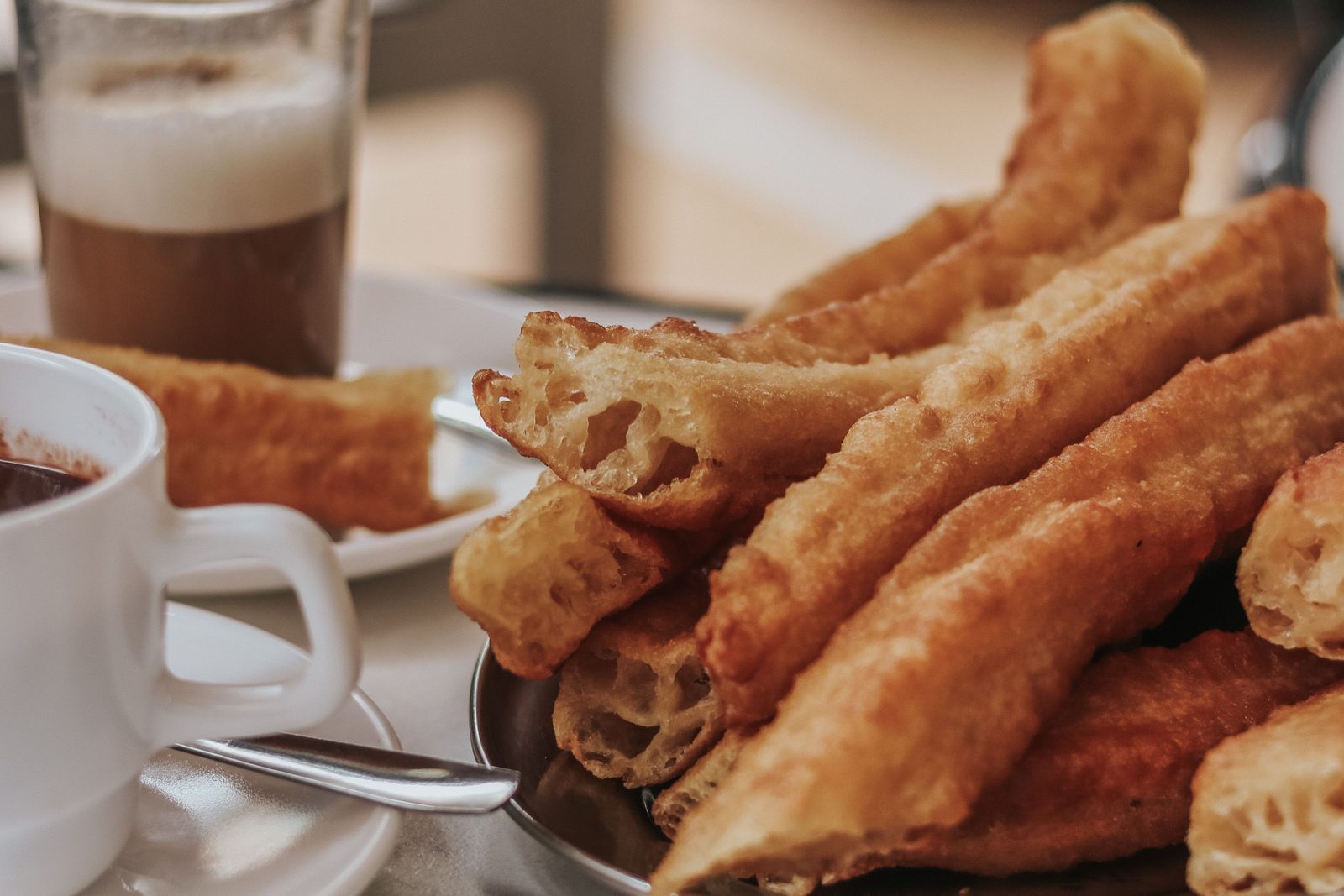
Fried dough, dipped in hot chocolate thick enough to stand a spoon in. Madrid eats this at two times of day: for breakfast, and at the end of a very long night. The second is more fun.
Learn the difference between churros, thin and crisp, and porras, thicker and softer. Order both. Chocolatería San Ginés, tucked into a passage off Calle Arenal, has been doing this since 1894 and is famous for keeping going through the night. There will be a queue. It moves quickly.
If you would rather do churros properly in daylight with someone explaining the history, there is a morning food tour that starts with exactly this.
See the morning churros tour, €59
5. Callos a la madrileña
Tripe, slow-cooked with chorizo, morcilla and a lot of paprika until the sauce turns sticky and deep red. This is the one that separates people who have eaten in Madrid from people who have eaten near Madrid.
If tripe puts you off, try a spoonful of someone else's before you decide. The texture is softer than you expect, and the sauce is the real reason to order it. La Bola and Casa Lucio both do a serious version.
The five strong recommendations
6. Patatas bravas
Fried potatoes with a spicy sauce. Every city in Spain makes them and every one of them argues about the sauce. Madrid's claim to the dish is strong, and its tradition leans toward a paprika-driven red sauce rather than the alioli-and-tomato combination you get elsewhere. Try them in a proper Madrid tavern and you will understand why people care.
7. Bacalao at Casa Labra
Casa Labra, near Puerta del Sol, has been open since 1860 and looks like it. Dark wood, tiles, a counter where you order, and a reputation built on fried salt cod: crisp battered strips and croquetas, eaten standing at the bar. It is one of the best inexpensive things to eat in central Madrid.
8. Oreja a la plancha
Griddled pig's ear, with garlic and paprika. Crisp at the edges, gelatinous in the middle, and a real test of whether you came to Spain to eat or to look at food. The old bars around Puerta del Sol serve it as a classic tapa. Order it with a cold caña and do not overthink it.
9. Vermut on a Sunday
More ritual than dish. On Sunday around midday, Madrid goes out for vermouth before lunch, usually red, on ice with an orange slice and an olive, alongside a few small tapas. La Latina is where it happens, and the streets around Cava Baja fill up from noon. It is the most Madrid thing you can do with an hour, and it is how the city tells you lunch is not until two.
10. Cochinillo at Botín
Roast suckling pig, so tender it is traditionally cut with the edge of a plate. Strictly this is a Castilian dish, best known from Segovia, but Madrid has a famous version at Sobrino de Botín, which has been operating since 1725 and is generally recognized as the oldest restaurant in the world. It is touristy and it is expensive. It is also genuinely historic, and the pig is very good.
The five worth trying if time allows
11. Gallinejas and entresijos
Fried lamb intestines and mesentery. This is Madrid's oldest working-class street food and it is quietly disappearing, with only a handful of places still making it. If you are curious about the Madrid that existed before the tourists, this is it.
12. Tortilla de patatas
Not a Madrid invention, but Madrid takes it seriously and the great argument is about the middle: set firm, or runny. Madrid leans runny. Have a slice standing at a bar in the morning with a coffee, which is how half the city eats breakfast.
13. Croquetas
Jamón, bacalao, chicken, sometimes something stranger. A good croqueta is crisp outside and almost liquid within, and you can judge a whole kitchen by one. Order them everywhere.
14. Torrijas (around Easter)
Bread soaked in milk or wine, fried, and dusted with sugar and cinnamon. Madrid's answer to French toast, and a Lent and Easter tradition. If you are in the city in spring, the bakeries will be full of them.
15. Rosquillas de San Isidro (in May)
Small ring-shaped pastries made for the festival of Madrid's patron saint in mid-May. They come in named varieties, including the plain tontas and the iced listas. Seasonal, cheap and very local.
What not to eat in Madrid
Paella
This is the big one. Paella is Valencian, it comes from the rice fields around Valencia, and Madrid has no rice tradition of its own. What you get on the terraces around Plaza Mayor and Sol is too often made in bulk, sometimes reheated, frequently topped with chorizo, which in Valencia would start an argument.
If you want paella, go to Valencia. If you are in Madrid and you want rice, the honest answer is to eat something else and save it.
Sangria on a tourist terrace
Madrileños do not really drink sangria. They drink tinto de verano, red wine with lemon soda, or a caña, a small cold beer. A jug of sangria on a central terrace is a tourist product priced accordingly.
Anything from a picture menu
A laminated menu with photos of every dish, in five languages, on a street off Plaza Mayor, is telling you who the restaurant is for. Walk two streets in any direction and the food gets better and cheaper at the same time.
When to eat what
Madrid runs late, and fighting it makes everything worse.
- Breakfast: coffee and toast, or tortilla, or churros. Nothing elaborate.
- Vermut: around noon to two, especially on a Sunday.
- Lunch: two to four in the afternoon. This is the main meal, and the time for cocido.
- Tapas: from about eight, moving between bars.
- Dinner: nine to eleven. A restaurant that is busy at seven is full of tourists.
- Churros: breakfast, or two in the morning on the way home.
Get the free Spain food guide
Six pages to keep on your phone: how tapas and pintxos work, the phrases that get you served, and what to eat in Madrid, Barcelona and San Sebastián.
Eat most of this in one evening
If you have one night and want someone to steer you round the right bars, this is the tour I send people to. It is the most reviewed food tour in Madrid by some distance, at 4.9 stars on 5,465 reviews, and it covers the tapas and tavern side of this list in about three hours.
Madrid Tapas & Wine Tasting, from €79
If you care as much about the history as the food, Devour's Tapas and Taverns tour is the more considered version, built around Madrid's oldest taverns.
Devour Tapas & Taverns, from €119
Prices checked 19 September 2026, per person. There are more options, compared side by side, in the best food tours in Madrid.
More on Madrid: the full city food guide, Mercado de San Miguel and whether it is worth it, and La Latina for tapas. Heading out of the city: Toledo and Segovia food day trips, Ribera del Duero wine day trips, and how Ribera compares to Rioja. Choosing between cities? See Madrid vs Barcelona for food. For the same exercise elsewhere: what to eat in Barcelona and what to eat in San Sebastián.