
Some links in this article are affiliate links. If you book through them we may earn a small commission, at no extra cost to you. We only recommend experiences we'd send a friend to.
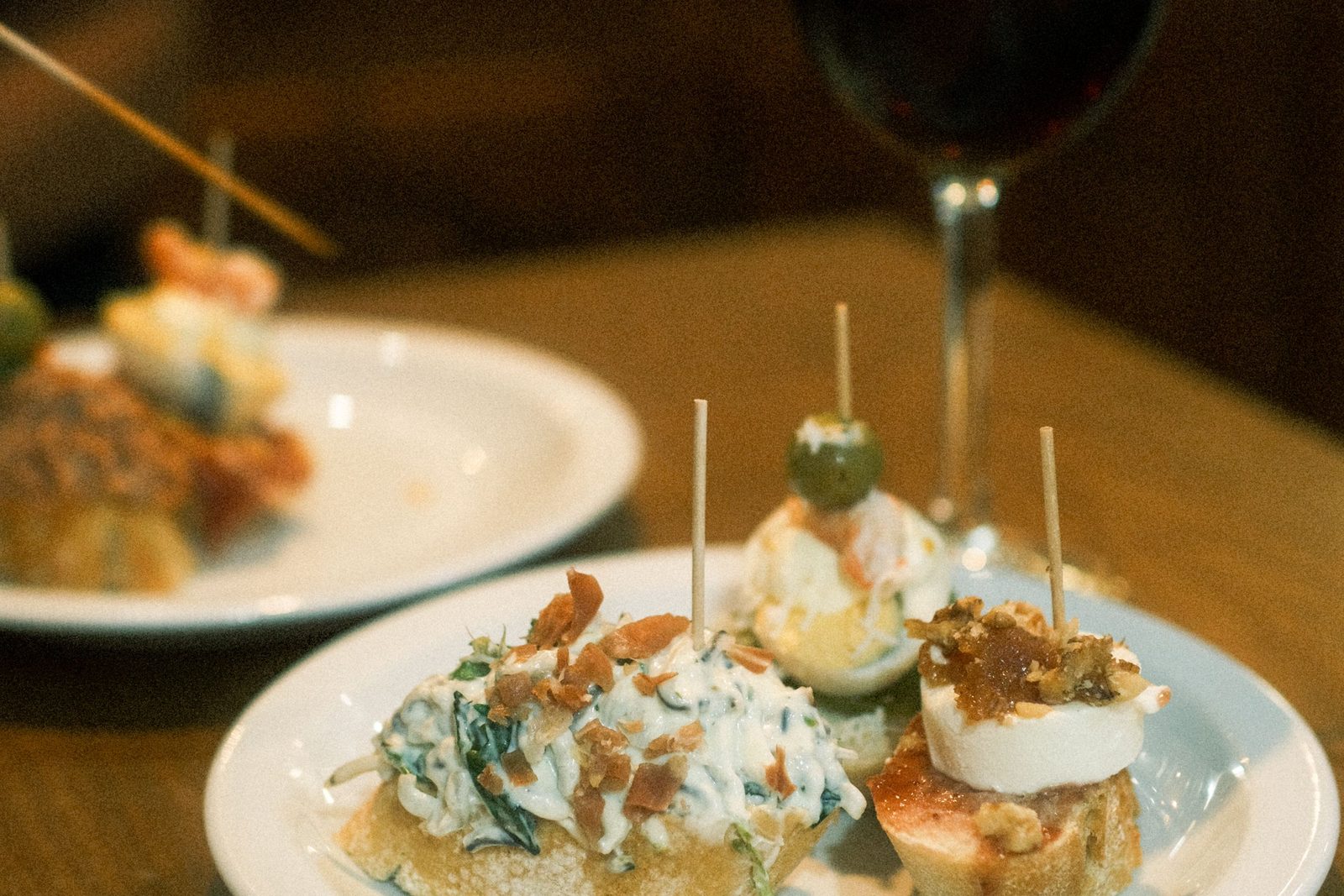
The pintxos lined up on the counter in San Sebastián are not the point. They're the wallpaper. The food that makes this city worth the trip is mostly cooked to order, chalked on a board behind the bar, and invisible if you don't know to ask for it.
That is the single most useful thing to understand before you eat here, and it changes how you read every bar you walk into. A good San Sebastián bar is usually famous for one or two things. Your job is to know which bar does which, order that, and move on.
So this is organized the way I'd actually eat the city: fifteen things worth your stomach, each with the bar that does it best. Most are in the Parte Vieja, the old town. (If you want the same bars as a route, night by night, see the best pintxos bars in San Sebastián.) A surprising number of the best are across the river in Gros, where the crowds thin out and the locals eat.
The short answer:A gilda where it was invented, a slice of Bar Nestor's tortilla if you can get on the list, txuleta, kokotxas, and a glass of txakoli poured from a height. Then order what's on the board, not what's on the counter. And if you're here between mid-January and late April, go to a cider house.
The five you can't skip
1. The gilda
Where: Casa Vallés, in the Centro, where it was invented. Then everywhere else.
A green olive, an anchovy and a pickled guindilla pepper on a single toothpick. It's the original pintxo, and it's the one you'll see on every counter in the city.
It was born at Casa Vallés, a bar opened in 1942. The usual story credits a regular for spearing the three ingredients together, and the name came from Rita Hayworth's film Gilda, which reached Spain after the war: the snack was green, salty and a little spicy, like the character. Nobody wrote down who said it first, which is the most Basque thing about the whole story.
The detail that separates a good one: the pepper should be a guindilla de Ibarra, the long, thin, mildly hot Gipuzkoa pepper, and the anchovy should taste of the sea rather than just salt. Order one at every bar and you'll have a quick read on how much care each place takes.
2. The tortilla at Bar Nestor
Where: Bar Nestor, Calle Pescadería, Parte Vieja.
A potato tortilla, runny in the middle, made only twice a day. You put your name down for a slice before it comes out, and when it's gone it's gone. That's not a gimmick, it's just how many they make.
Nestor is tiny and the rest of the menu is barely a menu: jamón, a tomato salad, blistered peppers and a txuleta. The tomato salad sounds like nothing and is one of the best things you'll eat in Spain in summer. Get there before it opens, ask about the list, and have a drink outside while you wait.
If you miss the Nestor list, Antonio Bar has a tortilla that people argue about with similar passion.
3. Txuleta
Where: Bar Nestor, or Bar Gandarias in the Parte Vieja.
Aged beef rib, salted, seared hard over coals, and served rare and sliced on a hot plate. It's sold by weight to share, and it's one of the great things to eat anywhere in the country.
Don't ask for it well done. The whole point is a deeply charred crust and a red middle, with the fat cap rendered enough to eat. Txuleta turns a pintxo crawl into a proper meal, so build an evening around it rather than squeezing it in at the end.
4. Kokotxas
Where: Restaurante Kokotxa, Calle del Campanario, Parte Vieja.
The cheeks of hake (or sometimes cod), cooked slowly in olive oil and garlic until the gelatin turns the oil into a sauce. Done al pil-pil they're glossy and silky; in salsa verde they come with parsley and white wine. It's the Basque delicacy most visitors never try, usually because the word on the board means nothing to them.
The restaurant named after the dish is the obvious place to have it properly, as a sit-down plate. Many pintxo bars also put kokotxas on the board when they have good fish in, so ask.
5. Txakoli
Where: Any bar. Watch the pour.
The local white wine: bone dry, sharp, slightly spritzy, low in alcohol. It's poured from a height into a wide glass, which opens it up and keeps the fizz lively. Much of it comes from the coast just west of the city, around Getaria.
It's the default with anything from the sea, it cuts through fried food better than almost anything, and with a plate of anchovies it makes complete sense. If you only drink Rioja in San Sebastián you're missing half of what the city pours.
The five strong recommendations
6. Anchovies, properly
Where: Bar Txepetxa, Parte Vieja.
The Cantabrian coast produces some of the best anchovies in the world, and San Sebastián treats them seriously. You'll see two kinds: salted, cured anchovies, brown and intense, and boquerones, white anchovies cured in vinegar, which are milder and brighter. Txepetxa built its reputation on anchovies, served on bread with toppings that sound unlikely and work.
7. Wild mushrooms
Where: Ganbara, Calle San Jerónimo, Parte Vieja.
Ganbara has been going for more than three decades, and its signature is a plate of grilled wild mushrooms topped with an egg yolk you break and stir through. It's seasonal, so what you get depends on what came in, and that's the point. In autumn especially, this is the plate to order.
8. Txangurro
Where: Ganbara, as a tartlet. Jose Mari Taberna, Parte Vieja.
Spider crab, picked, cooked down with tomato, onion and a little brandy, and served either in its own shell or in pastry. Ganbara's txangurro tartlet is one of the most-ordered pintxos in the old town. It's rich, sweet and tastes of the coast.
9. Stuffed pepper with tuna
Where: Bar Martínez, Calle 31 de Agosto, Parte Vieja.
A red piquillo pepper filled with bonito, the local white tuna, in a creamy sauce. Classic, unfussy, and a good example of what the old-guard bars do better than the modern ones. Bonito is a summer fish here, at its best from June into autumn.
10. Basque cheesecake
Where: La Viña, Calle 31 de Agosto, Parte Vieja.
The crustless cheesecake the rest of the world sells as "burnt" was invented here, and the original has a deep golden top, not a black one. I've written it up separately, including what makes a good one and where locals go when La Viña is too busy.
Five more, if you have the appetite
11. Bacalao al pil-pil
Where: Borda Berri, Parte Vieja.
Salt cod cooked gently in oil and garlic until it releases gelatin, then swirled until the oil emulsifies into a silky sauce. The same technique as kokotxas, applied to the fillet. Borda Berri also does a risotto made with Idiazabal, the smoked Basque sheep's cheese, that has its own following.
12. Indurain
Where: Bodega Donostiarra, Gros.
A gilda's bigger cousin: tuna, guindilla peppers, olives and onion with good olive oil. Bodega Donostiarra has been open since 1928, it's in Gros rather than the old town, and it's the kind of place that tells you why locals cross the river to eat.
13. Croquetas
Where: Bar Ricardo or Bar Urkabe, both in Gros.
Every bar in Spain makes croquetas and you can judge a kitchen by them: crisp outside, almost liquid within. Two Gros bars are especially known for theirs, jamón at Ricardo and chicken at Urkabe. They're a good excuse to spend an evening on the other side of the river.
14. Idiazabal
Where: Any good bar, often with quince.
The Basque Country's own cheese, made from the milk of Latxa sheep and often lightly smoked. It turns up on boards, in that Borda Berri risotto, and on the classic cider house menu with quince paste and walnuts. Buy a piece to take home.
15. Pantxineta
Where: Casa Otaegui, Calle Narrika, Parte Vieja.
A puff pastry filled with custard and topped with almonds, the old-school San Sebastián dessert. Casa Otaegui is a long-standing pastry shop in the old town, and this is what to buy there. It's the sweet thing the city ate before the cheesecake took over.
The cider house, in season
From mid-January to late April, cider season runs in the hills just outside the city, mostly around Astigarraga and Hernani. The sagardotegiak, cider houses, are usually farm buildings with long shared tables and enormous barrels.
The ritual is called txotx. When someone shouts it, a barrel is opened and a thin stream of cider shoots across the room. You queue with your glass, catch an inch or so from the stream, drink it, and go back to your seat. It's loud, cheerful and completely unlike a tasting room.
The food is a fixed menu, and it's always roughly the same: chorizo cooked in cider, a salt cod omelette, cod with peppers, a txuleta, then Idiazabal with quince and walnuts. Come hungry, eat slowly, and take a taxi back.
What not to eat in San Sebastián
Paella
Paella is from Valencia. San Sebastián has no rice tradition to speak of, and a paella on an old-town terrace is cooked for tourists. Eat it in Valencia instead. The same goes for most dishes that aren't Basque: the city is so good at its own food that anything else is a waste of a meal.
Counter pintxos that have been sitting there
Late in the evening, the cold pintxos on the bar have often been there since lunch. They aren't bad, but they're the least of what the bar can do. If the counter looks tired, order from the board.
Filling up in the first bar
The classic mistake. One or two things and a small glass, then move on. A proper evening here is four or five bars, and the first one is never the best one. Our guide to how pintxos work covers ordering, paying and the rest of the etiquette.
When to eat
- Lunch: roughly 1:30 to 3:30. Many of the best bars are calmer at lunchtime than in the evening.
- The evening crawl: from about 8. The old town is at its most crowded between 8:30 and 10:30 in summer and on weekends.
- Go early: at 7, you can still reach the counter and talk to the bartender. The food is the same.
- Cider houses: mid-January to late April, usually a long evening meal.
Get the free Spain food guide
Six pages to keep on your phone: how tapas and pintxos work, the phrases that get you served, and what to eat in Madrid, Barcelona and San Sebastián.
Eat a good chunk of this in one evening
If you'd rather someone walked you to the right bars on your first night, this is the tour I send people to. Five stops in the old town, eight pintxos and four drinks, a group of nine, and at €103 it's the cheapest of the pintxos tours I recommend as well as the most reviewed, at 4.9 on more than 1,300 reviews.
Old Town Pintxos & Wine, from €103
Price checked 19 September 2026, per person. Bars change hours and close for holidays, especially in winter, so check before making a special trip. Every tour compared in the best pintxos tours in San Sebastián.
More on San Sebastián: the full city food guide, what makes a good Basque cheesecake, and Rioja wine tours from San Sebastián. The same exercise for other cities: what to eat in Barcelona and what to eat in Madrid.