
Some links in this article are affiliate links. If you book through them we may earn a small commission, at no extra cost to you. We only recommend experiences we'd send a friend to.
Most people's first pintxos bar goes the same way. They walk into a packed room in San Sebastián, stare at a counter covered in food, can't work out whether to help themselves, and end up ordering the one thing nearest the door. None of it is complicated once someone explains it. Here's the explanation.
Pintxos are the Basque version of tapas, and they look similar enough that people assume the rules are the same. They aren't. The way you order, what you order, how much you eat and how you pay all work differently, and getting them right is the difference between a great night and a slightly confusing expensive one.
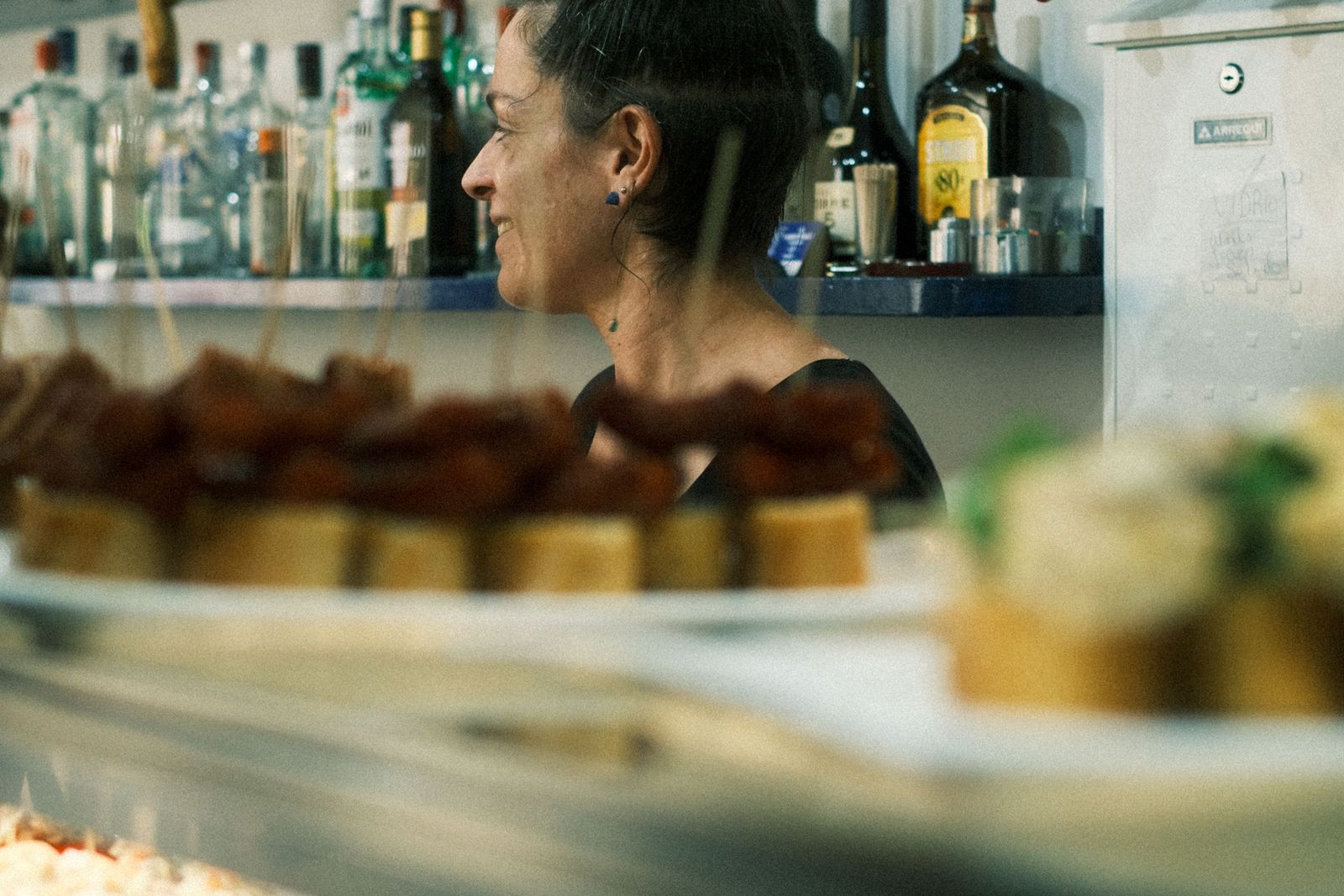
The short answer:Stand at the counter. Order a drink first, then point at one or two pintxos and let the bartender plate them. Check the board behind the bar for the hot ones, which are usually the best. Eat, pay when you leave by telling them what you had, and go to the next bar. Four or five bars is a proper evening.
What a pintxo actually is
The word comes from pinchar, to pierce or spike, because the classic pintxo is held together with a toothpick. Typically it's something on a slice of bread: anchovies, peppers, ham, a slab of tortilla, a spoonful of crab. The gilda, the most famous of all, is just an olive, an anchovy and a pickled pepper on a stick, no bread at all.
The Basque Country, and San Sebastián above all, turned the snack into a serious cooking tradition. Today a pintxo can be anything from a plain anchovy on bread to a miniature plate of slow-cooked beef cheek that wouldn't look out of place in a restaurant.
Pintxos vs tapas: the real differences
- Portion. A pintxo is one person's bite, eaten in two or three mouthfuls. A tapa can be a plate to share.
- Where you eat. Pintxos are eaten standing at the counter. Tapas are as often eaten at a table.
- How long you stay. With tapas, you might stay in one bar all evening. With pintxos you have one or two, then move on.
- Free or not. In parts of Andalusia a tapa can come free with a drink. Pintxos are never free. You pay for each one.
For how tapas work across the rest of Spain, including where they're still free, see our guide to how tapas work in Spain.
How to order, step by step
1. Get to the counter
Bars are small and often packed, especially in the evening. Find a gap at the bar and stand in it. A crowded counter is a good sign, not a reason to leave. Don't look for a table first: most of the best bars barely have any, and sitting down changes the whole rhythm.
2. Order a drink first
Catch the bartender's eye and order something to drink. That's the conventional opening, and it gets you on the bartender's radar. A greeting helps: kaixo is hello in Basque, and you'll hear it constantly.
3. Point, and let them plate it
The cold pintxos are lined up along the counter. Point at what you want, and the bartender will put it on a small plate for you. In the past it was common to help yourself, and you'll still find bars where that's fine, but in San Sebastián today most places want you to ask. If you're not sure, ask. Nobody minds.
4. Look at the board
This is the step most visitors miss, and it's the most important one. Behind the bar there's usually a chalkboard or a printed list of pintxos calientes, hot pintxos, cooked to order in the kitchen. These are typically the best things in the bar, and they're what the bar is actually known for. Order them from the bartender too. Some bars will take your name and call it out when it's ready.
5. One or two, then move on
Have one or two pintxos and a small drink, then leave and go to the next bar. Each bar does a couple of things well, and the whole point of the evening is to eat each bar's best thing. Filling up in the first place you walk into is the most common mistake visitors make.
6. Pay when you leave
You don't pay as you go. When you're ready to leave, tell the bartender what you had and they'll work out the bill. Many bars keep a running tab for you; plenty still run it on trust. Be honest and specific: two of those, one of the hot ones, two txakolis.
Hot pintxos vs counter pintxos
The counter is the shop window. The board is the menu. That's the single most useful idea in this article.
The cold pintxos on display are made in advance, and by late evening some of them have been sitting there since lunch. They're fine, and a few bars are genuinely famous for them. But the hot pintxos, cooked when you order them, are where a kitchen shows what it can do: kokotxas, slow-cooked meats, grilled mushrooms, seafood straight off the plancha.
They cost a bit more than the counter pintxos, and they're worth it. If a bar is known for something, it's almost always on the board.
One practical catch: kitchens close earlier than the bars. If you want the hot pintxos, don't leave it too late in either the lunch or evening session.
What to drink
- Txakoli. The local white wine: dry, sharp, slightly sparkling, low in alcohol, poured from a height into a wide glass. The classic pairing, especially with anything from the sea.
- Zurito. A small glass of beer. Order a zurito rather than a full beer and you'll get through five bars still standing.
- Txikito. A small glass of wine, usually red. The traditional drink of the bar crawl, though the zurito has largely taken over.
- Rioja. The region is two hours away and the house red is very often from there.
- Sagardoa. Basque cider, dry and sharp. More of a cider house drink, but some bars pour it.
Small measures are the point. You're having a drink in every bar, so keep them small.
The bar crawl has a name
Moving from bar to bar with friends, standing, drinking small measures and catching up on local news, is a Basque tradition called txikiteo, or poteo. The name comes from the txikito, the small glass of wine it was built around.
That's the rhythm a pintxos evening follows. Four or five bars, one or two things in each, a small drink at every stop. Locals sometimes go to six. It's sociable rather than gluttonous, and it only works if you keep moving.
When to go
- Lunch: roughly 1 to 3:30. Often calmer than the evening, with the kitchens in full swing.
- Evening: from about 8. In San Sebastián's old town, the crush peaks between about 8:30 and 10:30 in summer and on weekends.
- The tip: go early. At 7 or just before 8 you can reach the counter, see the board and talk to the bartender. The food is identical.
The unwritten rules
- Don't camp at the counter. Once you've ordered, step back a little and let the next person in.
- Don't ask for a table and a menu in a pintxos bar. If you want a sit-down meal, that's a restaurant, and San Sebastián has plenty of excellent ones.
- Order in small rounds. One or two at a time, not your whole order at once. You can always order more.
- Keep track of what you had, so you can tell the bartender accurately when you pay.
- Say thank you. Eskerrik asko in Basque, or gracias. Both are fine.
If you'd like more of the language, our phrasebook for ordering tapas in Spanish covers the essentials, and most of it works at a pintxos bar too.
Get the free Spain food guide
Six pages to keep on your phone: how tapas and pintxos work, the phrases that get you served, and what to eat in Madrid, Barcelona and San Sebastián.
Where to put it into practice
San Sebastián is the obvious place, and the old town, the Parte Vieja, has the densest concentration of pintxos bars anywhere. I've listed fifteen things worth eating there, with the bar that does each one best, in what to eat in San Sebastián. Gros, across the river, is quieter and just as good. For a route through both, bar by bar, see the best pintxos bars in San Sebastián.
If you'd rather have someone walk you through it on your first night, a guided pintxos tour does exactly that: the right bars, the right orders, and the etiquette explained as you go. This is the one I send people to. Five stops in the old town, eight pintxos and four drinks, a group of nine, from €103.
Old Town Pintxos & Wine, from €103
Price checked 19 September 2026, per person. Every option compared in the best pintxos tours in San Sebastián.
More on San Sebastián: the full city food guide, what to eat in San Sebastián, what makes a good Basque cheesecake, and Barcelona vs San Sebastián if you're still choosing.