
Some links in this article are affiliate links. If you book through them we may earn a small commission, at no extra cost to you. We only recommend experiences we'd send a friend to.
Spain is a good country to eat alone in, as long as you eat at the bar. The trouble starts when you treat it like home: a table for one at nine o'clock, a menu written for groups, and a waiter who brings you a plate of croquetas meant for four.
None of that is a reason to eat badly or eat in your hotel. The Spanish way of eating, standing at a counter, ordering one or two small things, moving on, suits one person better than it suits six. You just have to know which seat to take and which size to order.
The short answer:Sit or stand at the bar, not at a table. Order tapas or pintxos, not raciones, which are plates for three or four. Make lunch your big meal and take the menú del día. In San Sebastián every pintxo is already one person's portion. And book a food tour on your first night: you get company, and you get to try far more dishes than one person can order.
Take the bar, not a table
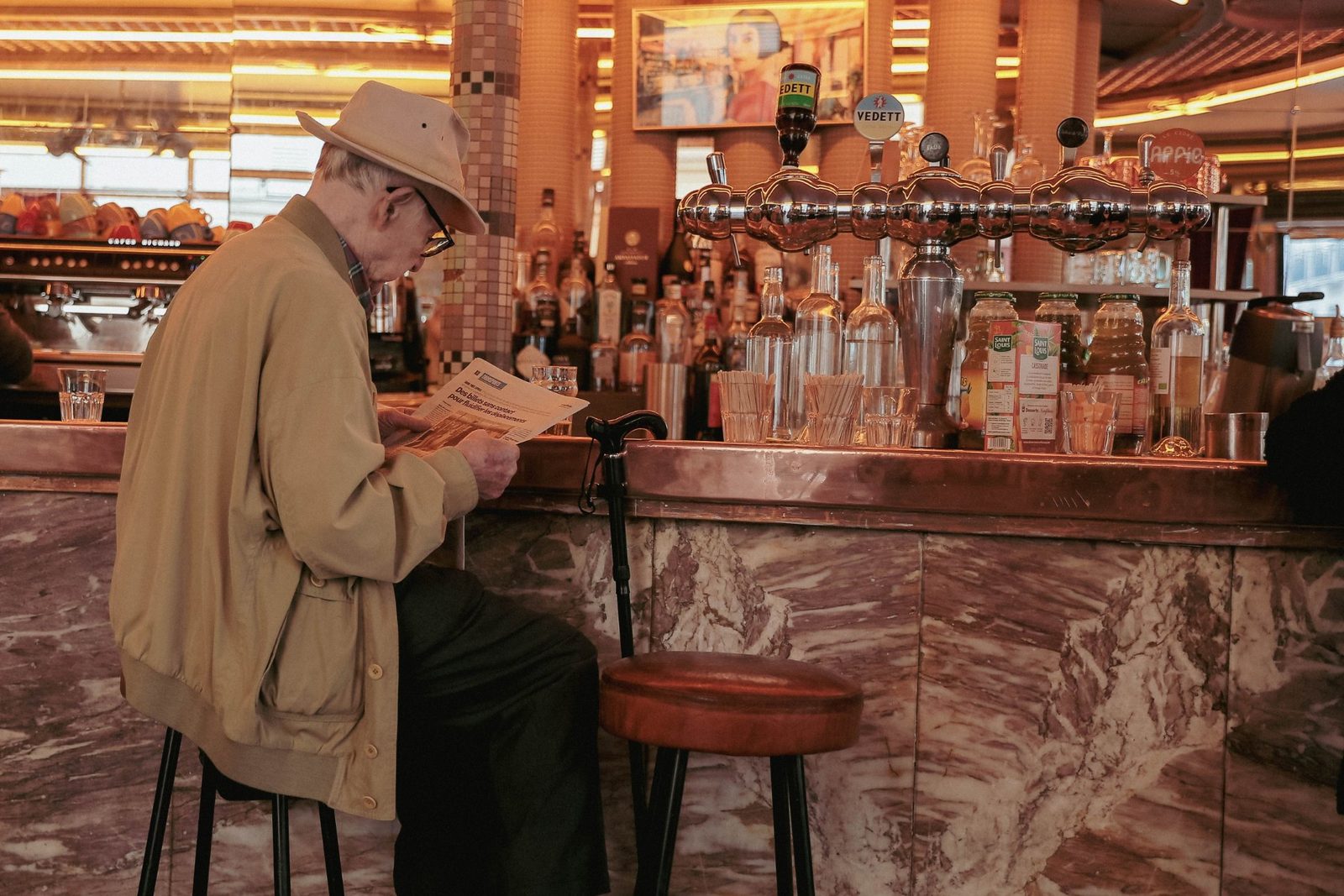
The counter is the solo traveler's seat, and in a Spanish bar it's also the best one. It's the cheapest place to eat: the bar is cheaper than the tables, and the terrace costs more again. You're next to the bartender, so you get served faster and can ask what's good. And you can see what everyone around you is eating, which is the most reliable menu in the room.
Nobody looks twice at one person at a bar counter, and locals often stand there even when tables are free. A table for one in a full dining room at 10pm is a different feeling, and it's the one most people mean when they say eating alone is awkward. Skip it.
Order the right size
This is the part that catches solo diners out. Spanish menus often list the same dish in three sizes, and the big one is built for sharing.
| Size | What it is | Alone? |
|---|---|---|
| Tapa | A small portion, one or two bites | Yes. Three or four of these make a meal. |
| Pintxo | A single bite, usually on bread | Yes. It's made for one. |
| Media ración | Half a plate, for two or three to share | One, as the main thing you eat at that stop. |
| Ración | A full plate for three or four | No, unless it's all you're eating. |
Not every bar does every size, so ask. ¿Hay media ración? is enough. And the opening line for a solo order at a counter is the simplest Spanish there is: Hola. Me pones una caña y una tapa de tortilla, por favor. A small beer and a slice of tortilla. The rest of the phrases are in how to order tapas in Spanish.
Make lunch the big meal
If you want a proper sit-down meal with a starter, a main and dessert, have it at lunch. The menú del día is a fixed-price lunch of three courses, and in Barcelona it typically runs €15 to €22 including wine. Lunch starts around 2pm and it's the main meal of the day, so this is when kitchens are at their best and a full meal costs least.
Then keep the evening for the bars, which is when they're at their best anyway.
City by city
San Sebastián: the format is built for one
A pintxo is one person's bite, eaten in two or three mouthfuls, standing at the counter. You order a drink, point at one or two things, eat, pay and move to the next bar. There's no portion problem to solve, because there are no shared plates. If you want the most food for one person, this is the city.
The catch is the crowd. The pintxos crawl is a deeply social thing here, and in the old town between about 8:30 and 10:30, in summer and at weekends, the bars are packed with groups of friends doing it together. You can do it alone without any trouble, but you may be the only person in the room who is. Go at 7, when you can reach the counter and talk to the bartender, and read how pintxos work before you go.
Madrid: counters, markets and vermouth
Madrid's old taverns are counter places. Casa Labra, near Puerta del Sol, is a good one to try alone: you order fried salt cod at the counter and eat it standing up. A bocadillo de calamares from a bar near Plaza Mayor is a solo meal on its own. The Mercado de San Miguel is easy too, because every stall sells small portions and you eat standing at the counters, so you can graze widely without committing to one dish.
The thing to plan around is cocido, Madrid's three-course stew. It's a big, slow lunch, and the best places make it to order, so book a day or two ahead. Everything else on the Madrid list works for one.
Barcelona: easiest for meeting people
Barcelona's bar culture is a little quieter and more reserved than San Sebastián's. But it's full of solo travelers, hostels, English speakers and easy places to be sociable, which makes it the easiest of the three for meeting people.
For eating alone, the Boqueria is the place to start. At the back of the market, the stand-up counter bars, Bar Pinotxo and El Quim, are where you sit on a stool and eat what they put in front of you. Pinotxo seats maybe 12 people, so go at 9am if you want a seat without a queue. On a Sunday around midday, a vermouth from the barrel at a counter is about as easy as solo eating gets. The rest is in what to eat in Barcelona and the Boqueria guide.
Why a food tour makes more sense alone
A food tour is a good idea for anyone on their first night in a Spanish city. For a solo traveler it solves two extra problems.
The first is the menu. Alone, you can only order so much before you're full. On a tour the plates are shared across the group, so you taste far more dishes than you could ever order for yourself. The second is company: three hours with a small group and a guide, and you come away with people to talk to and a list of bars to go back to on your own.
Small-group tours are priced per person, so you pay the same as everyone else. Private tours are the exception: the per-person rate stings when there's only one of you. These are the ones I'd book alone.
Barcelona: Old Town Tapas & Drinks Adventure
My first pick for anyone in Barcelona, and solo travelers are one of the people I'd book it for. Three hours, four traditional bars in El Born and the Gothic Quarter, and a group capped at 10, so you can hear the guide and talk to the people next to you.
Madrid: Guided Food Tour, Tapas & Spanish Wine
Five eateries across La Latina and the center, finishing with churros and chocolate. The operator caters explicitly to solo travelers, which matters more than it sounds on a tour built around sharing plates. It's also half an hour shorter than my top Madrid pick, which helps on a first night when you're still adjusting to eating at ten.
San Sebastián: Old Town Pintxos & Wine
The pintxos tour I send people to. Five stops in the old town, eight pintxos and four drinks, and a group of nine. Alone, it's the quickest way into a bar culture that otherwise runs on groups of friends.
Current prices and the alternatives for each city are in the full rankings: the best food tours in Barcelona, in Madrid, and the best pintxos tours in San Sebastián.
The one thing not to order alone
Paella. Real paella is made fresh, for a minimum of two people, and takes more than half an hour. A paella for one that turns up quickly in the evening is reheated rice. I've lived in Valencia for years, and I'm picky about my paella. Wait until you're there, or until you've got someone to share the pan with.
Get the free Spain food guide
Six pages to keep on your phone: how tapas and pintxos work, the phrases that get you served, and what to eat in Madrid, Barcelona and San Sebastián.
More on eating in Spain: how tapas work, how pintxos work, and if you haven't picked a city yet, Madrid vs Barcelona and Barcelona vs San Sebastián.